About us
Our Philosophy
We believe that a number of elements are essential to leadership in the 21st century.
Why?
As Foundation for Natural Leadership we believe that people have the potential and the responsibility to make the world of today and tomorrow more sustainable, both socially and ecologically. It is our ambition to awaken and stimulate that potential and to support people and organizations in finding new paths.
The FNL contributes to your development of consciousness and unlocks your natural leadership. Nature supports you in discovering your own nature and potential, and the awareness that we are one with nature: Nature as a portal to leadership. Our programs have impact on your personal development, but indirectly also on that of your family, friends, relationships, organizations and our earth.

How?
During our programs in nature, free from all stimuli, new insights arise through reflection. More awareness is created for the power of nature: nature works as a source of inspiration for what is really important to you. Our programs are aimed at making you aware of all elements of the universe and their place in the greater whole. And through impactful moments in nature you become more aware that you are part of nature.

What?
The foundation is formed by our Wilderness Leadership Transformation Programs with destinations in Africa and Europe. In addition, FNL offers a number of new Natural Leadership programs for different audiences, such as former trail participants and millennials.

Our approach
Our approach to leadership transformation is inspired by Theory U. Theory U is a body of thought, framework and methodology for fundamental transformation and renewal. Otto Scharmer is one of the founders of Theory U and, among other roles, teaches at MIT Sloan School of Management. Theory U is more than a theory. It is a powerful process that invites people to look at an issue with fresh eyes and with all their senses, and to develop creative solutions. The process enables learning from the future, rather than learning from the past.
Open mind
Postponing
Open heart
No judgement
Open will
Letting go
Presence means being present.
Using the power of intention
Integrate Head, Heart and Hand
Orchestrate the whole
1. Downloading
Limited perception, quick interpretation, operating on autopilot. Becoming aware of this and being able to consciously stop is powerful.
2. Observe
Observing attentively, with fresh eyes, and taking the time. Recognising judgments and preconceived ideas, and being able to suspend them.
3. Sensing
With an open heart, connecting with others and with the situation.
4. Presencing
Who am I at my core? What is my work/mission in this life?
Presence means being present, and sensing means feeling.
5. Crystallising
Envisioning the future or shaping it
6. Prototyping
Experimenting, testing ideas and co-creating.
7. Perform
Outcome of the actions taken, resolving the issue and carrying out the plans.
We believe that a number of elements are essential to leadership in the 21st century.
Connection is a key concept in this new approach to leadership. Everything is connected to everything else, and once you recognize this as a leader, you become fully aware of the bigger picture and ensure that your personal interests as an organization or individual align with that bigger picture. The most important thing is to establish a deeper connection with yourself, the people around you and with nature.
Learning is a central goal. It is important that we are always willing to seek new insights, gain new skills and adopt new attitudes by being open-minded and non-judgmental. Change is a continuous process, a fact that constantly calls us to innovate.
Synchronicity is an alertness, using all your senses, to what presents itself. It can be an invaluable tool and greatly enhance one’s ability to renew. The key is to become receptive to apparent coincidences or unexpected encounters. In many cases, we are actually surrounded by signs – the only thing is that we have to be aware to read them.

Intuition is invaluable to natural leaders. But often we have to learn how to follow our intuition, how to understand something through our feelings. Even if we know the solution to a challenging problem, we don’t always have the courage to implement it. How do we know we are on the right track? Usually, a lengthy analysis of the past yields only limited value. A more effective approach is to accept that something is the way it is and from there find a way to improve things. The key is to identify what is important in the here and now and what the situation demands.
Dialogue helps people to work together more independently of existing hierarchies. You give those involved the space to share their deepest truths. Often this in itself is sufficient to get things moving within the organization.
Attention. How can we consciously direct this attention and where is it channeled within the organization? These are familiar questions for the natural leader, who does not forget that attention plays an equally important role in our personal lives.
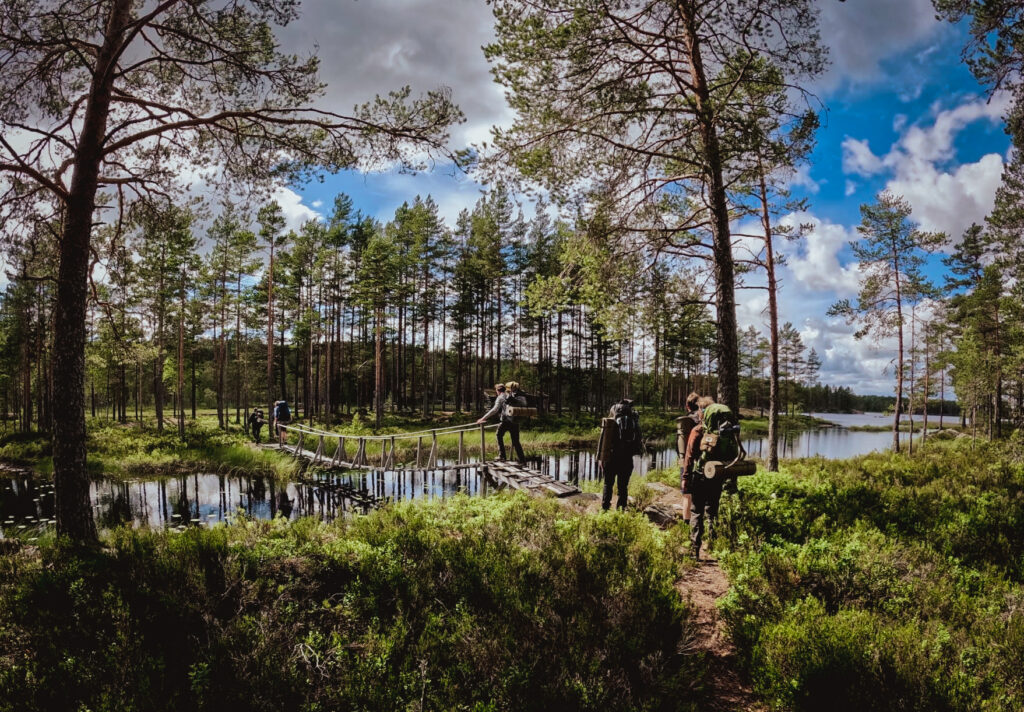
Reflection helps us see what is going on, recognize patterns, and take a moment to consider our own contribution to specific situations. Reflection is another crucial building block for learning.
Simplicity helps clarify things. There is quite a difference between restructuring an organization to cut costs and restructuring to reduce complexity. Addressing each other directly, being open and honest about what’s going on within the team, and avoiding a lot of headaches and paperwork can help tremendously to improve the efficiency of an organization.